Archive for the ‘Personal’ Category
Chequered Pasts
For the last 9 months or so, I had been working on a story involving background verification industry, résumé fraud in the Indian IT sector and the state of technical education in India. The story took a lot — it is the toughest writing that I have ever done, and so finally I am glad to be able to write this that it has been featured in the Reportage section of April’s issue of Caravan magazine.
You can access it online here.
I want to thank the editors at Caravan who I had the wonderful opportunity to work with in the last 9 months. It was one heck of a learning curve. I feel the magazine is filling an important void in Indian journalism and at the same time has a pivotal role to play in the years to come. It has been rightfully compared to the likes of The New Yorker. I am just a part time writer who is always on the lookout for a good story, so for them to give someone like me an opportunity (again) means a lot to me.
Thanks to the few people who have inspired me, who continue to inspire me with simple things like what they do in their everyday lives. To close friends who have reviewed countless times the drafts that eventually landed at the Editor’s desk. To friends who have genuinely felt for me — forever in my heart, come what may. They know who they are.
There were a lot of “takeaways” from this experience and I probably would write them down as a separate blog post but for now, let me just say that I would be happy to return to regular blogging.
More later!
On The Tales From Firozsha Baag
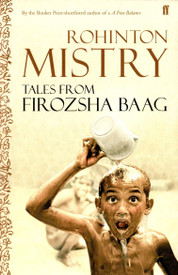
“A Fine Balance” by Rohinton Mistry is one of the finest (probably only surpassed by Rushdie’s Midnight’s Children) Indian literary novels ever. There have been very few books that have touched my heart as it did. I was new to Bangalore, in 2005 and was looking forward, with a book in hand, to getting lost in the myriad of lanes that the city had to offer.
A writer friend I constantly look up to, once suggested that “Tales from Firozsha Baag”, Mistry’s debut, was a great book and his personal favorite. I had the opportunity to read the book over the last couple of months. As it turns out, as debut books do, this one not only gives enough hints of the great writer that Mistry would turn out to be but it is a masterpiece in it’s own right. Here’s a small para I loved for the sheer prose of it, describing the Bombay local train scene in all it’s essence:
The suburban local was at the outskirts of Bombay; they would arrive at their destination in forty-five minutes. The ’17 Standees Allowed’ by the scratched and peeling sign had already been exceeded by the crush of Sunday morning commuters, but not to the extent of a weekday train: as yet, there were no roof-riders or window-clingers. In the sky the sun was higher than the when the train left Bombay Central. The heat began to strengthen rapidly now, seeming to feed on itself, growing more oppressive with every breath. From metal straps hung the standees, listless, upraised arms revealing identical damp patches under sleeves of shirts and blouses. Overhead, the fans turned ineffectively, whirring and rattling, their blades labouring with feeble rotations, trying to chop the air thick with heat and odour, scattering it around unelessly in the compartment.
The book is a collection of eleven short stories set in the 1980s about people living in a parsi colony in Bombay. The stories are intertwined while each story has a main subject/family and at least a few characters from other stories make appearances in each story.
As any good book would, this takes a little time to pick up even though the stories by themselves are distinct. But then again, with Mistry, it is not so much about the story but the beautiful prose that he weaves with his simple tools that comprise mostly of words. At times, the stories have an element of shock, but are mostly amusing and sometimes even funny but the common thread that binds them all is the pettiness that was the common ingredient that every middle class family in Bombay must have had in the 1980s — something I could relate to, for I grew up near Bombay at the same time and have seen the city at close quarters.
Consider for example, the story called Squatter in which Nariman Hansotia, a man popular with kids of Firozsha Baag for telling stories tells the story of an imaginary cricketer named Savukshaw, the greatest cricketer who played during the times of greats like Umrigar, Contractor and Farokh Engineer. Savukshaw, who gave up cricket for cycling, before he became a pole-vaulter and then a hunter could never find happiness in his life. Eventually Mistry, with Nariman at his aide, tells us about Sarosh, living in Toronto for ten years and yet not being able to balance himself on the western commode. So Sarosh, throws himself a challenge and what follows is a funny account of an Indian immigrant’s life in the first world.
Or one could keep thinking about Lend Me Your Light, where the lives of three friends, one of them, the narrator, the other being his brother and the third, a friend, keep crossing each other’s at intervals. Nothing much would have come of it if only the three would not have spent their childhood together. The story depicts how, in the 1980s, the Indian Youth reacted to the hopelessness surrounding the times. But then again, it is not so much about the story but in this case, it is the difficult questions that Mistry asks his readers by way of the characters he beautifully crafts, at will. It is this rush of emotions that these subjects feel and you, the reader, would find yourself inevitably attracted to these viewpoints, almost agreeing to one of them, and maybe taking out time, thinking and answering these uncomfortable questions, looking out ways to possibly ensure that your well-thought of answers that you mumble quietly within the vicinity of your head are somewhere heard. It is what any well told story should do to you, and this one most certainly qualifies for one, as it continues to dwell, this story of three boys growing up to men, living in different lands — Toronto, New York and a small village in Maharashtra but returning home to Bombay with a different set of emotions each time.
Or maybe I could also talk about the last story, if I can call it that, because Swimming Lessons has distinctive details about the author’s own life (More on that later). Here Mistry goes back and forth between the central character of the story who grew up in Firozsha Baag but finds himself in a Toronto apartment while his parents wait for his letters in India. The Toronto version of events turn out to be about his daily experiences where he recounts his childhood with minute details while the events that happen with his parents (presumably set a little in the future) talk about letters that his parents keep receiving only to find, inevitably to his father’s disappointment, a standard paragraph on weather from their son in Toronto who refuses to divulge details about his daily life without asking any in return until one day they find that their son, in a clerical job with an insurance company in Toronto, is also a writer and has written a book of short stories on his childhood experiences of Firozsha Baag! (Mistry was a banker until he started writing in his late 20s/early 30s)
The story is a joy to read with segments of hopelessness coupled with antidotes on what could become a writer, coming from the father’s perspective who is much delighted now that his son has found his calling in writing. And now, with the way of his father’s dialogue, Mistry conveys to us some theories that are heartening to hear for any aspiring writer. Consider some excerpts:
all writers worked in the same way, they used their memories and experiences and made stories out of them, changing some things, adding some, imagining some, all writers were very good at remembering details of their lives.
And:
Father explained it takes a writer about ten years time after an experience before he is able to use it in his writing, it takes that long to be absorbed internally and understood, thought out and thought about, over and over gain, he haunts it and it haunts him if it is valuable enough, till the writer is comfortable with it to be able to use it as he wants; but this is only one theory I read somewhere, it may or may not be true.
Ah no, I am not much of a writer but I can see why I keep remembering the past so often. Maybe I miss it so much and that I try to relive the experience by writing about it and talking about it in fine detail, as much as I can, as much as I can afford and as long as I have an audience. Maybe I should start using my memories of growing up on an island near Bombay to good effect. Anyway.
So the stories go on but with Squatter, Lend Me Your Light and Swimming Lessons, Mistry saves the best for the last. I wish I could mention more stories but that would be telling too much. Like the taste of filter coffee, the stories linger on long after you are done reading it.
This blog will stay
Of course it will. If there was such a doubt.
Last few months I have been working on an article that has taken a lot of my energy. I have travelled a bit for it. But I have been drained. I changed my job a few months ago and then I write part-time, so all this has been quite tiring. Furthermore, I am not sure if my story shall see the light of the day. It is not a good thing but I guess, as a part-timer I have seen worse. Not everything is rosy. For someone like me, a story in a word document is the conclusion of an idea. It is an endpoint. As a writer, it is very important to have faith in that idea. You need to have more faith in it than your friends, your wife, your readers and perhaps most importantly, your editor. You need to persist with that idea until that endpoint is reached. In my case, this time, that faith is now wearing thin.
But the most important thing, in all of this, is simply — that I have been writing. I have been thinking in the same depths that I would be in had I been writing on my blog. So I guess, there’s something there. That’s my takeaway, at the least, out of all this. That shall be the least common denominator.
So I reiterate, maybe mostly to myself, that I will continue to write on this blog. This was never an intended break. Thanks.
SMS Y to 5782711
Do you remember the time, not long ago, when people, at least here in Bangalore, formed human chains? When they had fancy stickers on the mudguard of their bikes, at the back of their cars, wearing black on a certain day while proclaiming their love and support for a man who they had never heard about ever before? Besides the things people did to show the support, there was one thing constantly making rounds: If you indeed supported him and really wanted the bill, his bill, to be made into a law, a piece of paper that could suddenly transform the times that we live in, for better or for worse only God can tell, you had to give a missed call. Yes. A missed call.
Anna Hazare asked the country for a missed call (A far cry from Subhas Bose’s demand for blood in return for freedom but hey, this is 2012). And we all obliged.
Hazare did something that no one in recent times could. Of all things, rekindled that fire, channeled that anger. We all had always thought that we deserve better politicians, now we were sure. But somewhere he also managed to create a beast out of the whole political system and made us believe that this external entity, this bad thing that could bite us all off, had to be tamed and put on a leash. We were our own heroes, the good guys. Those holding office, those ministers, the bad guys.
So we continued to live our lives as we always had. On one hand we put pictures of Hazare on our car bumpers and on the other we bribed traffic policemen, registrars, brokers and everyone else who could make our lives a little easier than standing in queues or visiting courts. But yes, we always were proud of supporting Hazare, our demand for that bill that most of us never bothered to discuss the internals of, forming human chains and giving missed calls.
And now we would be continuing our good deeds every sunday morning. Just like we believed Hazare would eradicate corruption, Aamir Khan has arrived with a bang to put a full stop to all social evils, one evil at a time, every week. The convenient time of a lazy sunday morning: all we would need is to press “Y” and send an sms — that’s it.
Did that just sound that I am against Satyameva Jayate? To many it did. Well, here’s my credo: I believe Anna Hazare and Aamir Khan have done all within their power to bring about a change. But I also believe that social evils can’t vanish when a celebrity hosts a tv show or writes a letter to a state’s chief minister.
I went about, asking people, about this change they were expecting. I was given many examples, quotes that startled me — like compared to America, there’s no incentive to be honest here. I have pondered on this for sometime but I can’t understand, why would someone need an incentive to be honest? And if that indeed holds good, lets say it has merit for we have an argument at stake, won’t you understand if your local politician comes up with a mini-scam?
And then there’s this golden excuse: Let them at the top change first. A top-down approach: The change for the good should begin at the top, why bother until then?
There will be many times in our lives when we are not on a couch and when it’s not a sunday morning, when we are not thinking of Aamir Khan that we’ll have two choices: one would be easy, all we would need to do is look the other way and the other would be tough, way out of our comfort zone. If for once, when we choose not to look the other way and take that tough call, we would have made an impact to our society in our own way.
So, Power to Aamir Khan and his show. But an “SMS Y to 5782711” will only take us so far.
long working hours and what not
I’ve been going through a stressed out time in my life, more stressful than usual and one of the things that generally bears the brunt during times like these is my blog.
I’m intending to be back soon but the frequency of my posts may drastically vary. These stressed out times have been around for sometime and the good thing is that though I may not be updating this blog often, I have managed to spend time writing. In fact, as I posted earlier, Caravan has published me and another post I wrote a few months back (How do you support Mr.Hazare? Link here) was published by Bangalore’s DNA.
As I have found out lately, a lot of energy goes in a story that makes it to print. But there are less things in life that give me a high than what I get when I see my writing in ink.
The Traffic Slowers
I have been published by The Caravan Magazine. This month’s (February 2012) issue carries an article that I wrote for them. It’s a story about four guys, security guards in Bangalore’s Domlur area, who ferry passengers from one side of the road to another. I called the article, “The Traffic Slowers”, while Caravan preferred to name it, “At Their Own Risk”. No, I am not complaining.
You can check out the article here, at Caravan’s website.
It was a wonderful experience working with the people at Caravan. As an aspiring writer, this experience means a lot to me. Going around city, making notes, reworking my prose that could fit in Caravan’s style…
My sincere thanks to those at Caravan who I worked with. They know who they are. I hope you do read and enjoy my story, story of Das, Rajvir, Mohanty and Ranganatha’s, as much as I did while writing it.
True to some instincts
I am trying a balancing act.
Back in 2003 when I used to write more often and rant endlessly on my blog there were more readers than what I have now. Then some things changed, I started writing less frequently although I felt that the quality of my writing improved and as writers do, I evolved to another level. In layman’s terms, I paid the price what Chetan Bhagat would if he tried to pull off an Amitav Ghosh (Nah, I am not suggesting that he’d be able to do that — he just can’t).
Now it has come to a point, where I do not feel inclined to write something here until it is “publishing material”. Or some writing that leaves me immensely satisfied as a (part-time) writer.
I am feeling free to be judgemental on myself, so here goes: I feel that is wrong.
Obviously, it is not necessary that every new post or piece of writing be superior in quality than the last. Somewhere I got stuck in that loop. As an aspiring writer shocasing his work on his blog, somewhere I started expecting my every new article to be better than the last. For a blogger, these things don’t do really much good. Once you fall in that iteration, your possibility of coming back to your natural self of writing becomes fainter in ever cycle.
Somewhere, it needs to balance out. Somewhere, as a budding writer and as an experienced blogger, you need to keep the urge of improving your writing while at the same time be true to your blogger senses.
For someone like me, it is important to be true to your blogger instincts because those are what bought me this far.
I am hoping meanwhile for the few readers to comment more often while I try to write more!